Kitchens, bathrooms and building work in Lindfield
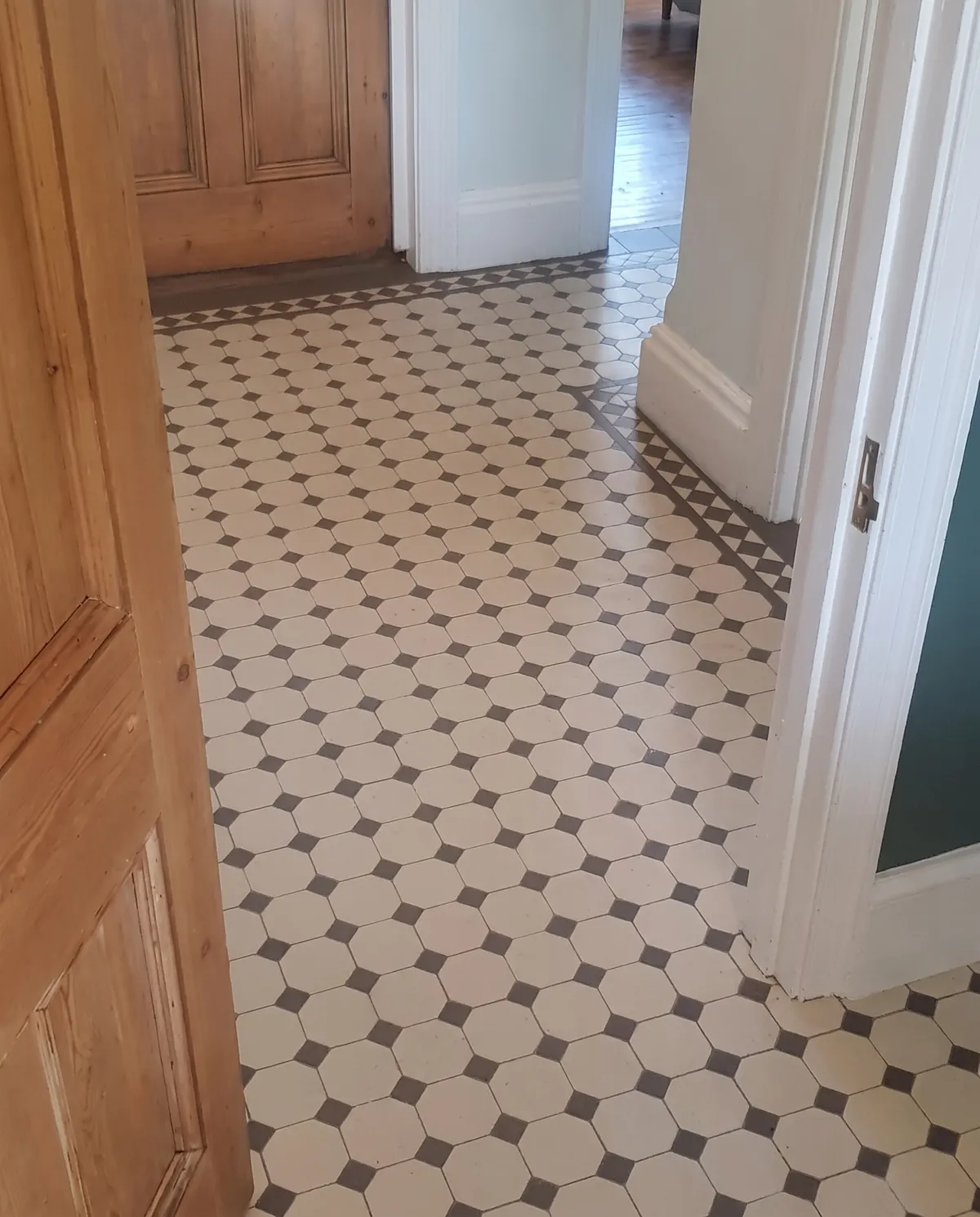
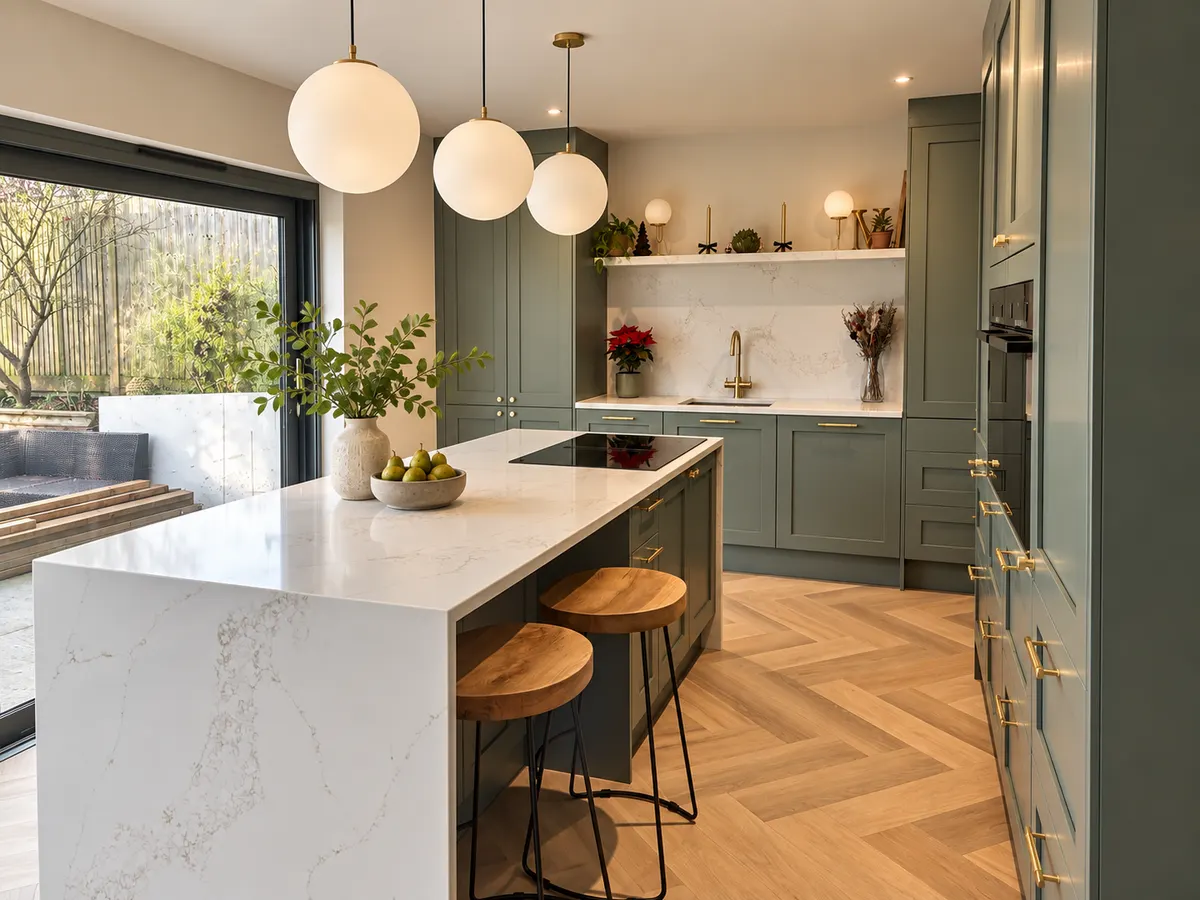
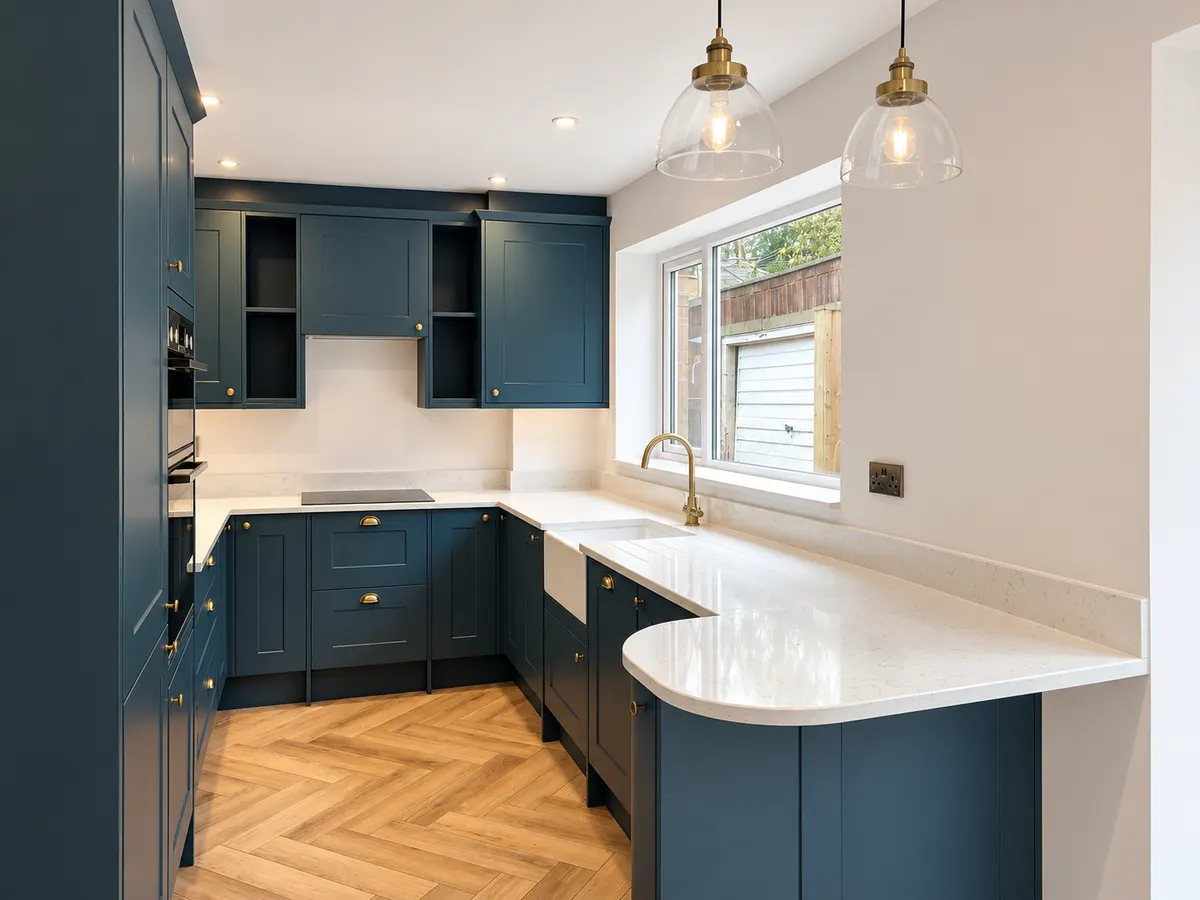
MCM is based in Lindfield, so this is the village we know best. We’ve built a rear extension here and fitted the kitchen inside it, finished a deep blue shaker kitchen and laid a mosaic hallway floor. Conservation area rules don’t surprise us.
- Postcodes
- RH16
- Planning
- Mid Sussex District Council
- From Lindfield
- Our home village
- Hours
- Mon to Fri, 8am to 6pm
What Lindfield’s houses are built from
Walk up the High Street towards All Saints and you pass more than forty medieval and post-medieval timber-framed houses. Many hide their frames behind later fronts of brick, stucco, tile hanging or mathematical tiles, and a few still carry Horsham Stone roofs. Inside, that usually means floors that slope, walls that aren’t square and a beam exactly where a wall unit wants to go. In a house like that, the kitchen is scribed to the room. Never the other way round.
Compton Road is different. It joined the conservation area in 1998 for its early 20th-century brick houses with clay tiled roofs, many still with their original features. These are the homes where a kitchen extension at the back makes most sense, as long as the front is left alone. On Black Hill the houses are larger and set well back in spacious grounds, and the plans get bigger with them: a family bathroom and an en-suite at once, or a whole floor reworked.
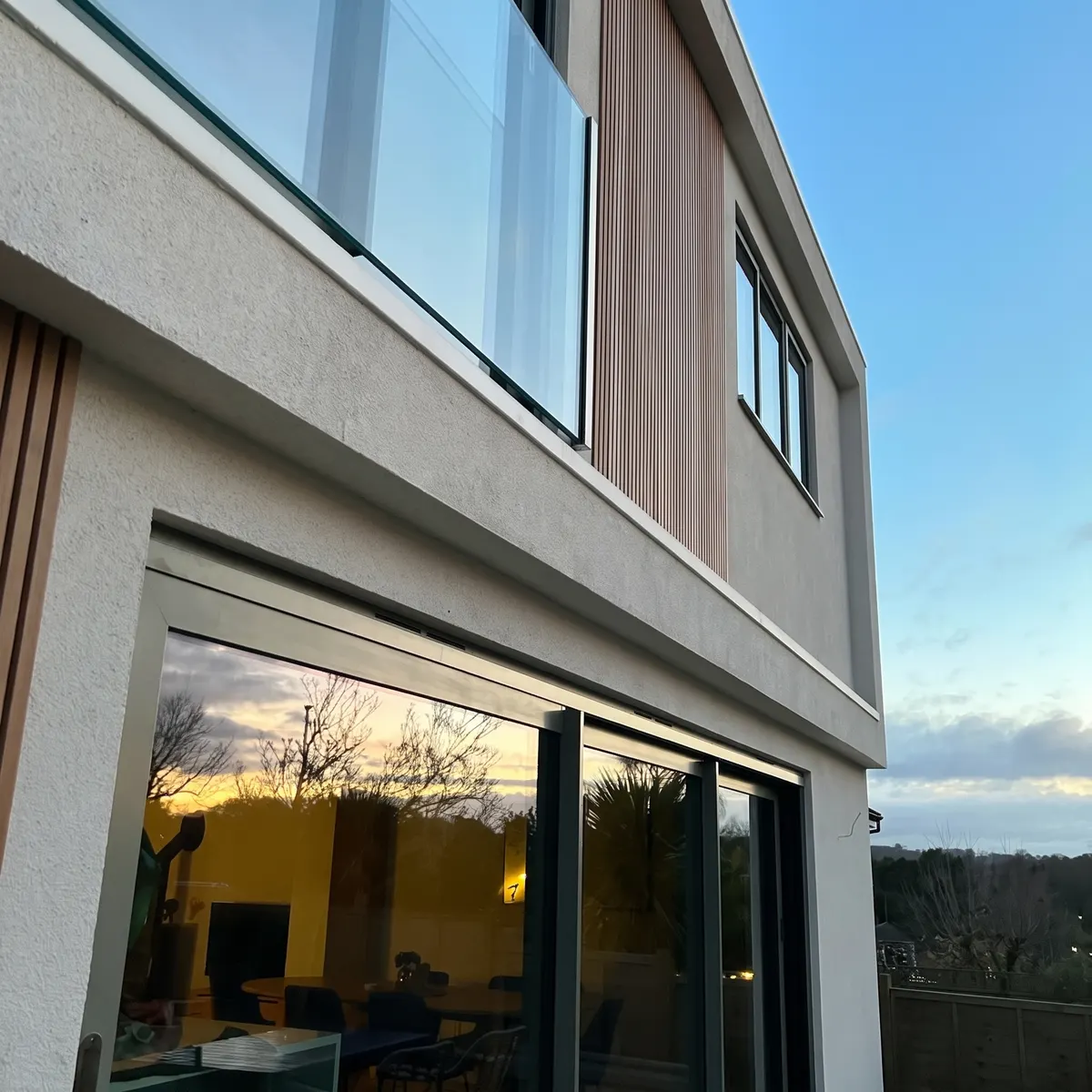
Our own Lindfield work covers most of that range. A modern two-storey rear extension with the layout inside rethought. A green shaker kitchen, with Howdens units and worktops from Sussex Stoneworks, fitted in an extension we’d built first. A tatty dormer rebuilt to match the original roof, a Victorian-style mosaic floor laid in a hallway, and a media wall we designed, made and fitted ourselves.
Lindfield’s Article 4 direction, explained
Mid Sussex District Council designated the Lindfield Conservation Area in 1969, covering the High Street and the area around the Common. It was extended to Black Hill in 1989 and to Compton Road in 1998. On top of that sits an Article 4(2) direction, made in 1995 and extended to Compton Road in 1998, “to control unsympathetic alterations to dwelling houses”. Put simply, some changes that would be permitted development on an ordinary street need planning permission here. Exactly which ones depends on the house, so we check with the council before any work starts.
Conservation area status changes the extension rules too. Side extensions, two-storey rear extensions, dormers and new render or timber cladding all fall outside permitted development. A 2006 survey counted more than 80 listed buildings and monuments in the village, and for those, internal work that affects the character of the house needs listed building consent. The council has no adopted character appraisal for the area, so local design guidance comes from the parish’s Village Design Statement, adopted in 2011.
What we’re usually asked to do in Lindfield
Most jobs in the village start with the kitchen and spread, usually to a wall or a floor.
- KitchensShaker suits the village, and both our green and deep blue Lindfield kitchens are shaker. In a timber-framed cottage we cut end panels and plinths to follow the walls instead of hiding gaps with filler strips.
- ExtensionsSingle and two-storey rear extensions, planned so the street side of the house stays as it is. We’ve built one here and then fitted the kitchen inside it.
- BathroomsFamily bathrooms and en-suites in houses with old timber floors, with pipe runs planned around the joists rather than notched through them.
- Bespoke joineryMedia walls, cupboards built into alcoves and under eaves, and repairs to old joinery made to match what’s already there.
Working around the Common and the pond
The High Street climbs from the pond up to All Saints, and there’s been cricket on the Common since 1747. It’s a lovely place to live and a slow place to unload a lorry. Being based in the village helps. We can take deliveries when the road is quiet, look in on a job at the end of the day, and get back quickly if a hinge or a tile needs another look. Neighbours hear from us before a skip or scaffold arrives, not after. Care and attention, as always.
Do I need planning permission for an extension in Lindfield?
It depends on where the house sits. Inside the conservation area, side extensions and two-storey rear extensions aren’t permitted development, and the Article 4 direction removes some further rights on part of the area, including Compton Road. Outside it, a modest single-storey rear extension often needs no application at all. We confirm which applies with Mid Sussex District Council before anything is drawn up.
Can you fit a new kitchen in a listed Lindfield cottage?
Yes, but the order matters. In a listed house, changes that affect its character, such as moving a wall, opening up a chimney breast or replacing an old floor, may need listed building consent first. New units in the same layout are usually simpler. We look at what in the room is historic and what isn’t, and tell you honestly whether consent is likely before you spend money on design.
Is MCM Design & Build actually based in Lindfield?
Yes. Mike Manwaring runs the business from Lindfield and has 25 years in the building trade. There’s no showroom. Mike comes to you, measures up and talks it through in the room itself. You deal with him from the first visit, and because he lives locally he’s close by if anything needs attention after the job is finished.
Will the Article 4 direction stop me replacing my windows?
Not necessarily, but it can mean you need planning permission for something that would be automatic elsewhere. Lindfield’s direction exists to stop unsympathetic changes to houses, and windows and front doors are the obvious place those happen. A like-for-like timber replacement is a very different application from a switch to uPVC. We won’t guess on this one. The council is asked first.
Areas we cover
Starting a project in Lindfield?
Tell us what you have in mind. Mike will come over, take a look and give you a written quote.